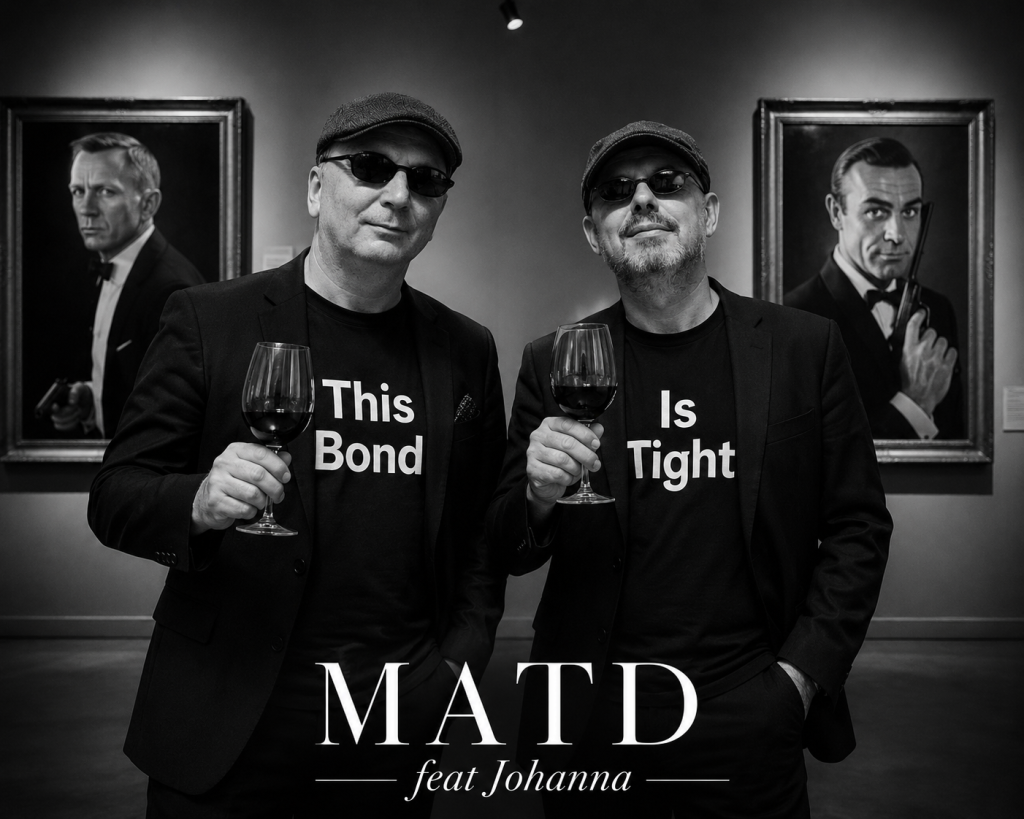
MATD feat. Johanna Hit the A-List Playlist with “This Bond Is Tight”

We’ve got a brand-new addition to the A-List Playlist, and this one comes with a special twist!

MATD feat. Johanna and their cinematic pop-rock single “This Bond Is Tight” has been selected for a special BOND POWERPLAY, playing throughout the next month.

Inspired by the world of James Bond and told from the Bond Girl’s perspective, this is a track packed with glamour, suspense, emotion and heartbreak.

So keep it locked and listen out for MATD feat. Johanna with “This Bond Is Tight”, our special BOND POWERPLAY at 7 PM Pacific USA time for the next month!

A powerful pop-rock story inspired by the world of James Bond—where the real danger begins after the mission ends.

Max Duck Records Oy proudly presents “This Bond Is Tight,” the brand-new single by MATD feat. Johanna—a cinematic pop-rock anthem inspired by the timeless atmosphere of James Bond, but told from a perspective audiences rarely get to hear.

Originally released in 2015 by MATD under their former name Max and the DucksThis Bond Is Tight was submitted as a candidate for the Swiss Eurovision Song Contest selection. The song quickly found an audience, reaching No. 2 on Finland’s Official Download Chart, remaining in the Top 10 for five consecutive weeks and attracting national media attention, including two feature articles in Iltalehti.

More than a decade later, the song returns in an entirely new form.

This new production is bigger, darker and more cinematic than ever before, featuring Finnish vocalist Johanna Koskiniemi, whose expressive performance transforms the song into an emotional story balancing glamour, heartbreak and suspense.

A Bond Story Told from the Other Side

While the unmistakable atmosphere of classic Bond films runs throughout the song, This Bond Is Tight is not really about James Bond.

It is about the woman standing opposite him.

The mysterious Bond Girl has fascinated audiences for generations—beautiful, fearless, intelligent and unpredictable, yet often left in the shadows once the adventure ends.

This song imagines what happens after the closing credits, when the explosions have faded, the Aston Martin has disappeared into the night and the emotional consequences finally begin.

The title itself carries two meanings.

“Bond” refers not only to the world’s most famous secret agent, but also to the invisible bond between two people.

Love, trust, desire and disappointment can all exist at the same time—and even the strongest connection can disappear in a single moment.

Ultimately, the song asks one universal question:

How strong is your bond?

Johanna Koskiniemi:

“The heart can be more dangerous than any weapon.”

For Johanna Koskiniemi, the appeal of the song lies in turning the familiar Bond universe inside out.

“I’ve always loved the world of James Bond. We all remember Bond himself, but the strong, mysterious and unpredictable women beside him often receive much less attention. I wanted to explore what happens when the story belongs to one of them.”

Johanna sees This Bond Is Tight not as a revenge story, but as a portrait of emotional chaos after heartbreak.

“Bond had a licence to kill. The woman in this song has only a licence to love. When your heart is broken, your imagination can briefly become as explosive as an action movie. The song isn’t about violence—it’s about those intense thoughts that can cross anyone’s mind when someone walks away without looking back.”

She describes the song as a miniature film.

“On the surface, she looks like the perfect Bond Girl—confident, elegant and untouchable. But underneath she’s simply a human being whose heart has just been shattered. When emotions boil over, the imagination starts writing a screenplay worthy of a spy thriller.”

Johanna concludes with the line that became the emotional centre of the project:

“Bond had a licence to kill. The rest of us only have a licence to love—and sometimes that’s what makes us the most vulnerable.”

A Fictional Interview with the Bond Girl

As part of the artistic concept behind the single, MATD imagined a fictional interview with the mysterious heroine.

Interviewer: You’ve been called a dangerous woman. Are you?

Bond Girl:
“Not when I’m loved. But the heart is a strange weapon. Break it, and it can become more dangerous than any pistol.”

Interviewer: The lyrics mention smoke from a gun barrel and crimes committed in the heat of passion. What really happened?

Bond Girl:
“Nothing the police should investigate. Everyone imagines impossible scenarios when someone leaves without looking back. Mine simply sound as though they were written by a James Bond screenwriter.”

Interviewer: Was Bond to blame?

Bond Girl:
“Bond had a licence to kill. I only had a licence to love. That’s the game I lost.”

Interviewer: Do you regret anything?

Bond Girl:
“Only giving my heart to someone who left me watching the taillights of an Aston Martin disappear into the darkness. That was the only real shot fired in this story.”

Interviewer: What would you want Bond to do if he heard this song?

Bond Girl:
“I hope that, this time, he’d look back.”

About Johanna Koskiniemi

Finnish vocalist Johanna Koskiniemi brings both power and vulnerability to This Bond Is Tight. Her cinematic interpretation gives voice to a character who appears fearless on the outside while hiding deep emotional wounds beneath the surface.
About MATD

MATD is a Finnish pop-rock duo consisting of Marcos Kuusjärvi and Veli Eronen.

Originally performing as Max and the Ducks, the duo adopted the name MATD in 2020. Throughout their career they have collaborated with musicians and vocalists from around the world.

Their best-known international release is “Me and My Dog,” featuring British singer Tom Bedlam.

Max and the Ducks (MATD) has reached Finland’s Official Download Chart with nine different singles. Their biggest commercial success, “Who The Fuck Is Alice,” became Finland’s No. 1 downloaded single.

Production

The new version of This Bond Is Tight was recorded in collaboration with MATD’s long-time studio partners in Venezuela.

Final guitar recordings, mixing and mastering were completed by Sammy Roiha at Sound Ateljee Studio in Lohja, Finland.

Backing vocals were performed by Hertta Lustig.

The official music video was produced by Mikael Hindsberg of Finnproductions.eu, who has created MATD’s visual productions for several years.

Listen & Follow MATD

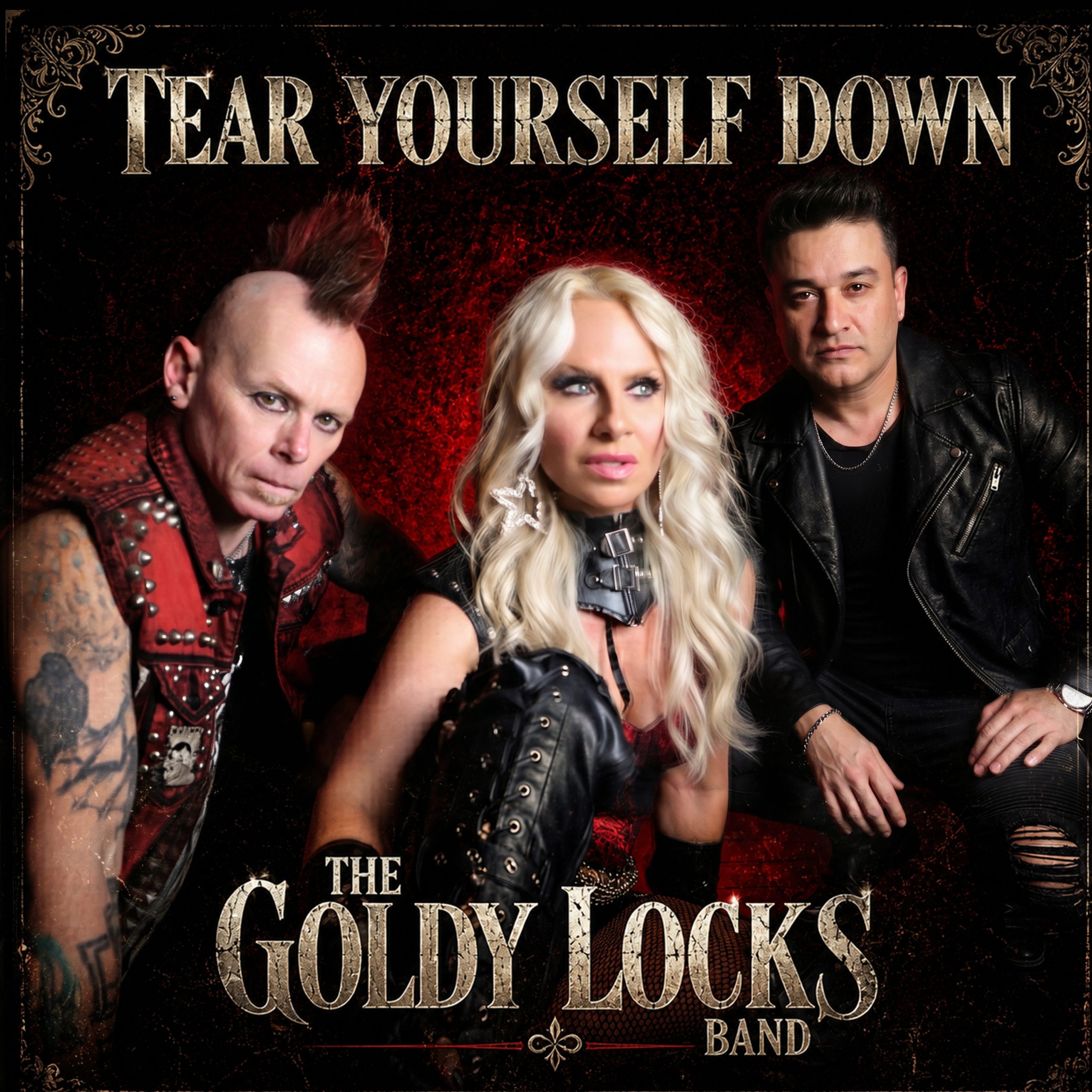
Playlist Choice: The Goldy lockS Band’s ‘Tear Yourself Down’ Earns Featured Rotation

The Goldy lockS Band return in impressive fashion with their powerful new single, ‘Tear Yourself Down’, an epic rock ballad that blends emotion, melody and cinematic scale into one unforgettable release.

From the very first note, the band’s unmistakable signature sound shines through. Goldy Locks delivers a passionate and distinctive vocal performance that carries both strength and vulnerability, drawing listeners deep into the song’s emotional core. Rich melodic arrangements and a soaring atmosphere give the track an almost otherworldly quality, while its expansive production creates a huge wall of sound that feels both intimate and larger than life.

Although built around the heart of a classic rock ballad, ‘Tear Yourself Down’ never loses its edge. The anthemic chorus explodes with powerful rock sound and soaring melodies, capturing the feel of an epic movie soundtrack while maintaining the band’s unmistakable rock identity. Beneath its uplifting energy lies a subtle melancholy that resonates long after the final note, making for a deeply moving listening experience.

‘Tear Yourself Down’ has been added to our A-List Playlist, where it will receive daily airplay. The single has also been selected as a ROCK POWERPLAY at 6 PM Pacific USA time, earning featured rotation every day for the next month.

Written and performed by The Goldy lockS Band, the track features Goldy Locks on lead vocals, Rod Saylor on drums, and Wandley Bala on bass, production and mixing.

“Tear Yourself Down”: Turning Society’s Loudest Lies Into Rock & Roll Truth

There are songs that tell stories, and then there are songs that reach out and grab someone before they fall. “Tear Yourself Down” is one of those songs.

At first glance, the title sounds almost confrontational, as if it’s aimed at the listener. But that’s exactly where people misunderstand it. The song isn’t telling anyone to tear themselves down. It’s pleading with them not to. Because by the time someone begins believing they’re not enough, the damage has usually been done long before they ever speak those words aloud.

Written and performed by The Goldy lockS Band—Goldy Locks, drummer Rod Saylor, and bassist, producer, and mixer Wandley Bala, “Tear Yourself Down” was born from decades of lived experience. Goldy’s life in entertainment and Rod’s observations growing up shaped its foundation, but neither wanted to write a song that belonged only to musicians or women. They wanted to write about something far more universal: what happens when the messages society repeats often enough begin sounding like your own thoughts.

The title itself is the warning. It isn’t They Tear You Down. It’s Tear Yourself Down. Not because that’s what you should do, but because that’s what eventually happens when criticism, objectification, rejection, comparison, trauma, and impossible expectations are repeated often enough. The outside voices don’t disappear. They simply move inside, quietly convincing you to finish the job they started. “Tear Yourself Down” is a refusal to let that happen.

For Goldy Locks, those voices arrived early. She entered the entertainment industry as a little girl and spent the rest of her life building a career that has stretched across music, television, professional wrestling, photography, and entrepreneurship. Along the way, she learned a painful lesson that countless women understand without needing it explained. Before people judged her work, they often judged her appearance. Before they listened to her voice, they decided how she should look, how she should behave, how loud she should be, and how much space she was allowed to occupy.

The opening lyric isn’t poetic license. It’s memory. “Since you were a girl, you carried every room with a smile while it buried you alive.” Girls often learn to smile before they learn they’re allowed to say no. They’re taught to make everyone else comfortable. To be agreeable. To avoid becoming “too much.” To stay grateful. To stay pleasant. To shrink themselves just enough to fit inside everyone else’s expectations.

The next lyric captures that conditioning with heartbreaking clarity. “They said be sweet, be still and you should make yourself small. So you swallowed your thunder to survive.” Survival isn’t always dramatic. Sometimes survival looks like silence. Sometimes it looks like swallowing the very parts of yourself that made you powerful in the first place.

As the song moves forward, it traces the impossible standards placed on women from adolescence into adulthood. Beauty is celebrated, then commodified. Youth is praised, then treated like an expiration date. Worth becomes something measured by appearance before character, desirability before intelligence, and perfection before humanity. “When you’re seventeen they tell you beauty’s your crown…” Then comes one of the song’s most devastating turns. “Now you’re twenty-three they put a price on your skin.” Those lyrics aren’t aimed at one industry. They’re aimed at a culture that too often asks women to earn value through appearance while overlooking everything else they bring to the world.

Another lyric has already sparked conversation. “Men build their empires on the very same mistakes you make.” Goldy is quick to point out that it isn’t written as an attack on men. It’s an observation about grace. Men have often been given permission to fail publicly, learn, rebuild, and continue climbing. Women frequently feel as though one mistake follows them forever. “Tear Yourself Down” pushes back against that imbalance, not by diminishing men, but by asking why women aren’t so often afforded the same opportunity to recover.

While Goldy’s experiences gave the song its voice, Rod Saylor gave it much of its heart. Growing up, one of his closest friends survived a sexual assault. He watched someone who had once been joyful slowly retreat into herself. The laughter faded. The confidence disappeared. The light in her eyes changed.

As a teenage boy, he struggled to understand what had happened. He remembers feeling conflicted simply for experiencing normal attraction because, in his young mind, sexuality had become tangled with the pain someone he cared about had endured. Years later, what remains isn’t anger. It’s compassion. It taught him that trauma doesn’t simply hurt people. It changes how they see themselves. Sometimes it changes the story they tell themselves about who they are.

That’s exactly why “Tear Yourself Down” exists. Not to reopen wounds. To interrupt them.

The message reaches beyond personal trauma and into the realities of modern life, where comparison has become almost impossible to escape. Artists live beneath an avalanche of followers, streams, likes, comments, algorithms, rankings, and statistics. Every day offers another scoreboard. Another reminder of what someone else has accomplished.

Artificial intelligence has only accelerated that pressure, creating an environment where musicians aren’t simply competing with one another anymore. They’re competing with an endless flood of content that never sleeps. Rod often says he can’t remember another era when this many artists were trying to be heard all at once. The danger isn’t simply being overlooked. The danger is believing your worth can be measured by numbers on a screen. Comparison has become one of the quietest ways people learn to tear themselves down.

That same philosophy led directly to the band’s Only Talent movement and its companion campaign, Buy The Record Not The Bod. The two projects are inseparable. If “Tear Yourself Down” explores what objectification does to the human spirit, Only Talent confronts the culture that teaches people to value appearance more than artistry.

After years of hearing that sex would always sell better than music, Goldy and Rod decided to stop arguing with the industry and start asking better questions. Together they posed strategically covered only by CDs and vinyl records, not to sell their bodies, but to expose the uncomfortable reality facing independent artists everywhere. If this is what gets your attention, will you stay long enough to hear the music?

What began as two musicians making a statement has evolved into a movement. Fellow artists Amy Jo and Sarah Ashley have since joined through features in Harper’s Bazaar Digital and New York Weekly, while more independent musicians continue stepping forward with the same message: support the art, not the algorithm. Buy the record. Buy the ticket. Buy the shirt. Help artists build careers instead of expecting them to survive on attention alone.

Both the campaign and the song ultimately arrive at the same destination. Neither is asking people to feel sorry for artists. They’re asking people to remember the humanity behind them.

At its core, “Tear Yourself Down” is about surviving everything that tells you your value belongs to someone else. Trauma. Objectification. Rejection. Impossible standards. Comparison. The constant pressure to become a version of yourself that makes everyone else more comfortable.

The song doesn’t deny those voices exist. It simply refuses to let them have the final word. Because the world already has enough people willing to tell you who you aren’t. The last thing they deserve is your help.

Maybe that’s what Tear Yourself Down has been trying to say all along: Don’t buy the lies. Buy the record. Not the bod. Only Talent.

Explore the music & movement

www.GoldylockSBand.com

@GoldyLocksRocks @GoldylockSBand @DrumNinja6

https://www.youtube.com/@GoldyLocksBandRocks

Only Talent Promos

Not A Prop, A Pro – https://www.instagram.com/p/DK5VmtEOkf8/

On Display, Not on Discount – https://www.instagram.com/p/DK-XFdPxfbi/